Kinusaiga Supplies Guide
Everything you need to get started!
If you’re new to Kinusaiga, one of the first questions you’ll have is: “What supplies do I actually need?” Good news — Kinusaiga is a wonderfully simple craft. You don’t need a sewing machine, fancy tools, or a huge stash. Just a handful of materials will carry you through your first project, and once you have them, you can make dozens of beautiful pieces.
This guide gathers all the essential supplies in one place, so you can bookmark it, share it, and come back anytime you need a refresher. I’ll also include recommended tools and materials so you can shop confidently.
Supplies You Need to Get Started
Foam Board (The Foundation of Kinusaiga)
Your foam board is the base of your artwork — it’s what holds every tuck in place. For best results, choose XPS foam (extruded polystyrene). It’s dense, smooth, and creates clean scoring lines.
Why XPS is best:
Holds crisp grooves
Doesn’t crumble
Easy for beginners
Works beautifully with cotton and linen fabrics
Avoid EPS (the beaded Styrofoam kind). It crumbles, sheds, and makes scoring frustrating.
Where to buy
XPS Insulation foam panels (Most Hardware stores): Link
Seam Ripper (Your Tucking Tool, my personal favorite)
This is the tool you’ll use to gently press fabric into the scored lines.
Seam Ripper:
Perfect for beginners
The pointed tip helps guide fabric
Easy to find and inexpensive
Where to buy
Craft Knife or Precision Blade (For Scoring)
If you’re scoring your own board, you’ll need a sharp blade.
Look for:
Precision craft knives
Replaceable blades
Comfortable grip
Where to buy
Scissors
Any sharp pair will do, but small fabric scissors give you better control.
Where to buy
Ribbon (Optional Finishing Touch)
This is how you finish the edges of your foam block for a clean, polished look.
Where to buy:
Grosgrain ribbon: Link
Hot Glue Gun & Glue Sticks (For Securing Your Ribbon Border)
A hot glue gun is the easiest and most reliable way to secure the ribbon to the border.
The glue sets quickly, holds firmly to foam, and keeps your ribbon smooth and tight around the edges. It’s beginner‑friendly, inexpensive, and makes your finished piece look beautifully professional.
Why you’ll want one:
Fast, strong adhesion
Perfect for attaching ribbon or bias tape
Helps create crisp, clean corners
Works on foam, fabric, and most trims
Great for finishing both small and large Kinusaiga blocks
Where to buy
3M Double‑Sided Tape (For Securing Fabric While You Work)
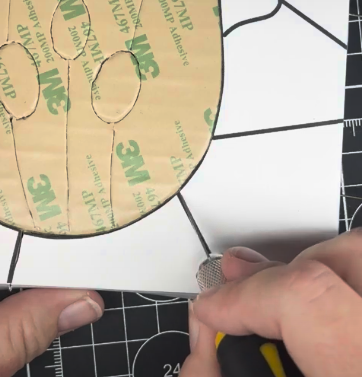
This is one of my favorite “why didn’t I start using this sooner?” supplies. A wide roll of 3M double‑sided tape (6 inches) helps keep your fabric from shifting while you tuck, especially on larger designs or pieces with lots of tiny sections.
You simply apply a strip of tape to the foam surface before scoring and laying down your fabric. It gives just enough grip to hold everything in place without interfering with the tucking process. Beginners love it because it reduces frustration, and experienced makers love it because it keeps edges crisp and prevents accidental slipping.
Why it’s helpful:
Holds fabric securely while you tuck
Prevents shifting on detailed designs
Makes the process smoother and more beginner‑friendly
Works beautifully with cotton, linen, and lightweight blends
Where to buy
Sewing Pins (To Secure Your Template While Scoring)
When you’re scoring your Kinusaiga board, keeping your template perfectly still is essential. A simple set of sewing pins makes this step so much easier. Just pin the corners of your printed design directly into the foam — it holds everything in place while you trace and score, preventing shifting, crooked lines, or accidental slips.
This tiny step makes a big difference in how clean and accurate your scoring turns out, especially for detailed designs or curved lines.
Why they’re helpful:
Keeps your template firmly in place
Prevents shifting while scoring
Helps maintain crisp, accurate lines
Works with both printed and hand‑drawn templates
Where to buy
Fabric (Your Creative Voice in Kinusaiga)
Fabric is where your Kinusaiga piece becomes yours. There’s no “right” or “wrong” choice — the beauty of this craft is that every artist gets to decide exactly how their board will look and feel. Your fabric choices shape the mood, the texture, and the personality of your design, which is why no two Kinusaiga pieces ever look the same.
Some makers love soft, cozy palettes. Others lean into bold colors, tiny prints, or unexpected combinations. You can use cotton, linen, lightweight blends — whatever speaks to your style. The magic happens when you start pairing patterns and colors in a way that feels uniquely you.
Why fabric matters:
It defines the personality of your piece
Every color and pattern changes the final look
Your choices make each board one‑of‑a‑kind
There’s endless room for creativity and experimentation
Kinusaiga is a craft where your imagination leads the way. Whether you’re working with curated bundles or hand‑picked fabrics from your stash, the board becomes a reflection of your artistic voice.
Templates (The Soul of Your Kinusaiga Piece)
If fabric is the voice of your Kinusaiga artwork, the template is its soul. It shapes the flow of the lines, the movement of the design, and the feeling your finished piece carries. Every tuck follows the template’s rhythm, which is why choosing a design you love matters.
You can draw your own or use a pre‑made one — and hey, I do design my own Kinusaiga templates, too. They’re available here, and the bundle sets are a great way to explore different styles.


Comments